Contractor Website Redesign: 10 Signs It’s Time to Rebuild Your Home Service Website
A contractor website does not need to be fancy to do its job. It does need to be clear, current, easy to use, and believable the moment a homeowner lands on it.
That sounds simple, but a lot of home service sites miss the mark. I see it all the time with painters, remodelers, flooring crews, dock builders, enclosure companies, and specialty trades that grew faster than their websites did. The business got better. The jobs got bigger. The service area expanded. Meanwhile, the site stayed stuck in an earlier version of the company.
A stale website is not just a branding problem. It affects lead quality, call volume, trust, and how much work your office has to do before a prospect is ready to book. If your site creates hesitation, confusion, or doubt, people bounce and call the next contractor.
A proper contractor website redesign is less about chasing trends and more about lead-focused contractor websites fixing friction. If your website no longer reflects the business you run today, these are the signs that it is time to rebuild it.
Your homepage does not quickly say what you do, where you work, and how to contact you
This is the most common problem, and it costs contractors leads every week.
A strong homepage should answer three questions within seconds. What do you do? Where do you do it? How does someone reach you? If a homeowner has to scroll, hunt through the menu, or guess whether you serve their city, you have already made the process harder than it should be.
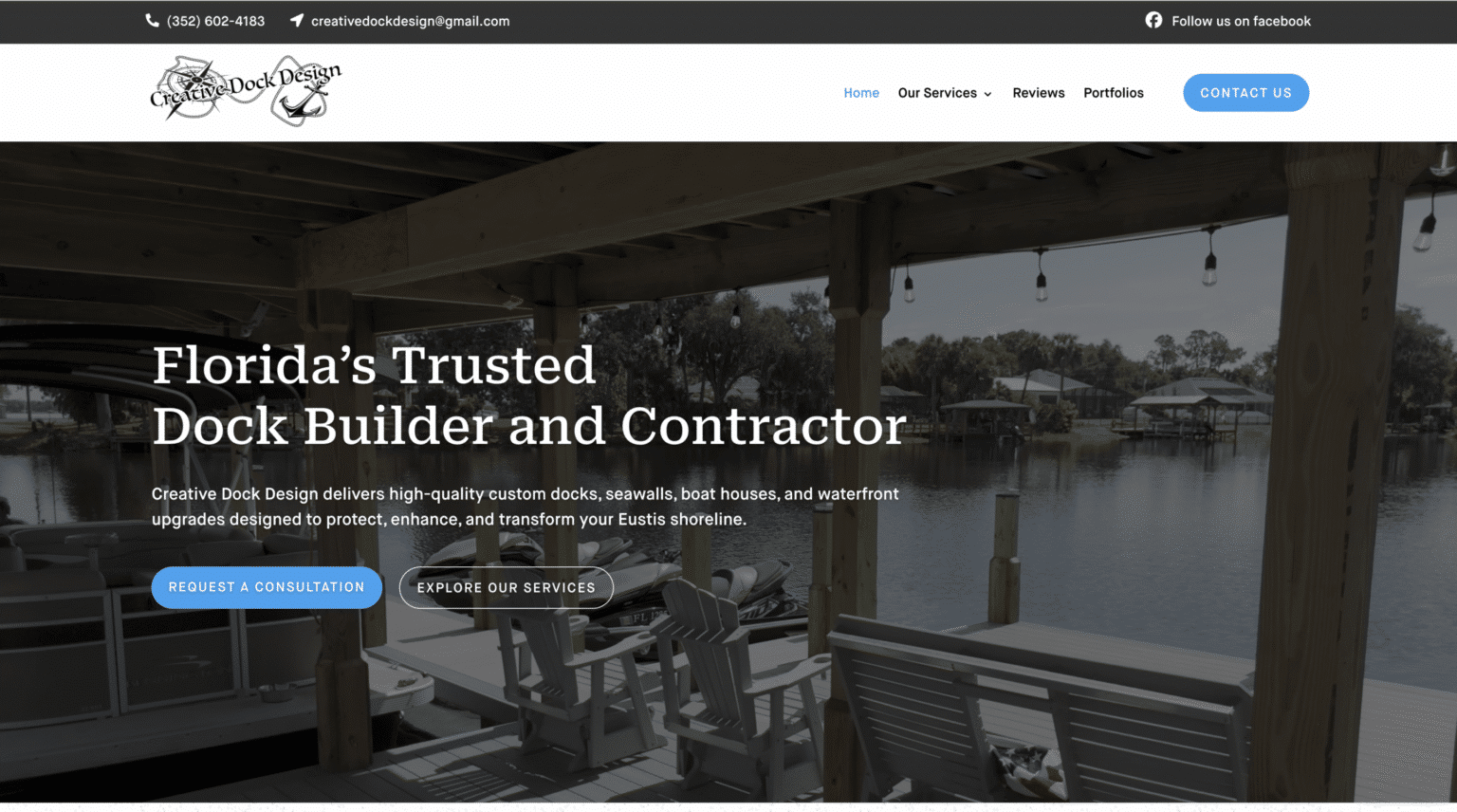
For a flooring contractor website design, that might mean making it immediately obvious that you install hardwood, luxury vinyl, and tile in specific service areas. For a home remodeling website design, it means clarifying whether you focus on kitchens, bathrooms, whole-home renovations, or additions. For pool screen enclosure website design or dock builder website design, the need for clarity is even stronger because many homeowners are not browsing casually. They are trying to solve a specific problem and want to know, fast, whether you are the right fit.
When the top of the page is vague, overloaded, or built around clever wording instead of direct messaging, leads drop off. A rebuild makes sense when the homepage no longer works like a clear front door.
Your website looks dated enough to make people question the business
Homeowners may not know web design terminology, but they know when a site feels old.
An outdated website often shows up through cluttered layouts, tiny text, inconsistent images, awkward spacing, old logos, and pages that feel like they were built for desktop computers ten years ago. People do not usually say, “This website is outdated.” They say nothing, then leave.
That reaction matters more in higher-ticket trades. If someone is considering a major project, whether it is concrete coating website design, epoxy flooring website design, mold remediation website design, or home remodeling website design, they are sizing up your professionalism before they ever call. A dated site can create the impression that the company is disorganized, inactive, or behind the times, even if the field team does excellent work.
This is where many owners underestimate the problem. They are used to the site because they see it every day. Prospects are seeing it for the first time, and first impressions are harsh. If your business has grown in quality, pricing, and project size, but your site still looks like the budget version of your company, a redesign is overdue.
The mobile experience is frustrating
Most contractor traffic comes through phones. That makes mobile performance non-negotiable.
If your buttons are hard to tap, forms are awkward, images load slowly, or the phone number is not easy to find, you are putting up roadblocks for your best leads. A lot of older sites were built with desktop layouts first and mobile as an afterthought. The result is cramped text, broken formatting, giant image files, or menus that feel annoying to use.
This is especially damaging for emergency or urgent trades. In mold remediation website design, for example, homeowners are often looking for quick reassurance and a direct next step. They are not in the mood to pinch and zoom through a confusing page. The same goes for contractors getting calls from homeowners dealing with worn floors, storm damage, deteriorating docks, or a remodeling timeline that just accelerated.
A good rebuild sharpens the mobile path. Better spacing. Cleaner calls to action. Faster loading. Fewer distractions. The payoff is immediate because mobile users tend to make fast decisions. If the site makes reaching you easy, more of them will call.
You are missing the service pages that modern buyers expect
A one-page website might have been enough when your goal was simply to exist online. It is rarely enough once you need the site to support real lead generation.
Contractor websites usually need a clear services page, or separate pages for major services, along with an about page, service-area information, and a contact page. This is not about filling space. It is about matching how homeowners search and evaluate.
Someone looking for epoxy flooring website design logic is not behaving the same way as someone planning a large remodeling job, but both want relevance. The person searching for concrete coating may want details about the finish, use case, and fit for garage floors or commercial areas. The person searching for flooring contractor website design examples may be comparing materials, installation types, and local availability. The more specific your services are, the less useful a generic catch-all page becomes.
I have seen many contractor sites where the homepage mentions ten services in a few short blurbs, but there is nowhere deeper to click. That creates a trust gap. A redesign becomes worthwhile when your current structure no longer supports the range of work you actually want to sell.
Your website no longer matches your current service area
This one sneaks up on growing companies.
Maybe you started in one city and now work across several counties. Maybe you added new neighborhoods, stopped taking jobs in distant areas, or built a stronger reputation in one part of your market. If your site still reflects the old footprint, it creates confusion and weakens your positioning.
For contractors, location clarity matters. Homeowners want to know whether you serve them. They also want to feel that you know their area. Trade plus location messaging is one of the most important basics on a home service website. If your site is vague about where you work, or still highlights places you no longer prioritize, the website is no longer aligned with the business.
This is common with niche trades. A dock builder website design should usually reflect where waterfront projects are actually happening. A pool screen enclosure website design should speak to the local markets the company actively serves. The same goes for remodeling, flooring, mold remediation, and concrete coating.
When a website is out of sync with your real service area, rebuilding is often cleaner than trying to patch old pages and menus.
The site does not build trust well enough
Trust is the whole game in home services. People are inviting you onto their property, into their home, or into a large investment decision. Your website should reduce uncertainty, not add to it.
Weak trust signals show up in a few ways. Stock-heavy visuals with little job-specific proof. Thin or generic copy. No clear about page. No real sense of the team, process, or the type of work you are known for. A contact page that feels like an afterthought. Messaging that says very little beyond “quality service” and “customer satisfaction.”
Contractors often get the best results when the website includes trade-specific photos and proof that feels grounded in actual work. That matters whether the focus is flooring contractor website design, home remodeling website design, mold remediation website design, or a more specialized service like dock builder website design. People want evidence that you understand their kind of project.
A redesign is justified when the current site feels hollow. If it does not answer doubts, it does not support sales. The website should help a prospect feel like calling you is a safe next move.
You dread making edits because the site is hard to manage
Some websites fail quietly. They look acceptable at a glance, but behind the scenes they are a headache every time you need something changed.
Maybe adding a service takes too long. Maybe updating text means emailing a developer for every little edit. Maybe no one on your team knows how to log in, who controls the hosting, or where the domain is registered. That setup is fragile, and it becomes a real business problem once your company starts evolving.
Reliable small-business guidance always comes back to ownership and control. Your domain should be in your business’s name. You should know who controls the hosting and key accounts. You should also be able to move the site if the relationship with the provider ends. If your current setup is a black box, that is a red flag.
This is where a contractor website redesign can solve more than aesthetics. It can clean up the underlying ownership, access, and maintenance structure. That matters whether you choose a freelancer, an agency, a DIY platform, or a managed website for small business use. The right decision depends on how hands-on you want to be, but lack of access is never a good sign.
The site is slow, neglected, or technically shaky
A website does not need to win awards. It does need basic upkeep.
Slow loading pages, broken forms, security worries, missing updates, and no clear backup plan all chip away at performance and confidence. Many cheap builds become expensive later because they launch fast and then leave the owner exposed. Every future edit is billable. Nobody explains what happens after launch. Hosting is separate. Security is vague. Backups are assumed but not confirmed.
This is where many owners start asking, how much does a contractor website cost, and the real answer is that the sticker price is only part of the story. The hidden costs are usually in content, hosting, SSL and security, updates, backups, maintenance, and future edits. A low upfront number can look attractive until routine changes become a recurring hassle.
If your site feels unstable or unsupported, rebuilding may be smarter than patching. Sometimes what you need is not just a new design but a better operating model.
You have outgrown the way the website was originally purchased
Most contractor websites come from one of four routes: a DIY builder, a freelancer, an agency, or a managed website subscription. Each has trade-offs in cost, speed, support, and how much maintenance you want handled for you.
A lean DIY site can be enough when all you need is a credible online presence. A freelancer can work well when the scope is straightforward and you know exactly what you want. An agency may make sense when the website is central to a larger marketing effort. A managed website for small business owners can be a practical fit when you want hosting, security, backups, updates, and support bundled into one ongoing service.
The problem is not that one option is always right or wrong. The problem is staying with a model that no longer fits the business.
If you are asking about the best website builder for contractors, what you are often really asking is whether you want to keep doing this yourself. Some owners do, and that is fine. Others are tired of spending evenings wrestling with pages, plugins, logins, and image sizing. If your site needs frequent updates and nobody has the time or appetite to manage them, a different setup may be worth it.
For contractors who want a more hands-off arrangement, a managed subscription can remove a lot of friction. As one example, Scalable Websites offers professionally designed contractor websites on a monthly subscription with hosting, security, unlimited updates, and a dedicated project manager included. Most sites launch in days. They are based in Houston, TX and serve contractors nationwide. For the right owner, that model is less about design alone and more about not having to babysit the site.
Your business has changed, but your website still tells the old story
This is the biggest sign of all.
Maybe you started as a general handyman operation and are now focused on premium remodeling. Maybe your flooring company added epoxy and concrete coating. Maybe you narrowed your service mix because certain jobs were more profitable. Maybe your average project size doubled. Maybe your best referrals now come from a different kind of customer than they did three years ago.
When the business changes, the website should change with it.
I have seen contractors keep a website that still highlights the services they want less of, underplays the work they want more of, and sends mixed signals about price point and project type. That creates bad-fit leads. The office spends time fielding calls from people who are not looking for the right thing, while the better prospects leave because the site does not speak directly to them.
A website rebuild is often the cleanest way to reset the message, sharpen the offer, and align the digital front end with the company you are actually running now.
What a rebuild should fix, not just how it should look
Before you hire a web designer for contractors, get clear on what the redesign needs to solve. Design matters, but solving the right business problems matters more.
Here are the five issues a worthwhile rebuild should address:
- Clear trade and location messaging on the homepage
- Better mobile usability and faster loading
- Service pages that match your real offerings
- Stronger trust through real project proof and clearer company information
- A maintenance setup you understand and can live with
If a proposal focuses mostly on colors, style, and layout but says little about ownership, edits, support, or post-launch responsibilities, keep asking questions. Red flags include vague pricing, unclear account control, no access to the site, no backup or security plan, and no explanation of what happens after launch.
That matters just as much as the visuals. A site that looks good on launch day but turns into a maintenance burden six months later is not a real upgrade.
A better website should make sales easier
The goal is not simply to “have a better website.” The goal is to make trust easier, action easier, and growth easier.
A lean site is still enough for some contractors. If your business mainly runs on referrals and you just need a credible presence, keep it simple. But once you need stronger lead generation, multiple service pages, service-area pages, location-specific messaging, or regular updates, investing more starts to make sense.
That is usually the point when owners start comparing options more seriously and asking what a contractor website redesign should cost. The answer depends on scope and support model, but the better question is whether the rebuilt site will actually fit the next stage of your business. A cheap rebuild that still leaves you with weak messaging, unclear ownership, and constant maintenance bills is not cheap in the long run.
A good rebuild feels like relief. The homepage is clear. The phone number is easy to find. The service pages make sense. Mobile visitors can act fast. The business looks current and credible. You know who controls the domain and hosting. You know how updates get handled. You are not guessing.
If your current website is getting in the way of any of that, it is probably time.